











Glendronach — buy or sell

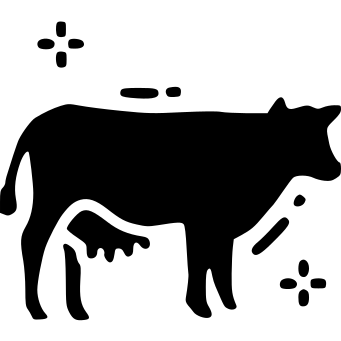

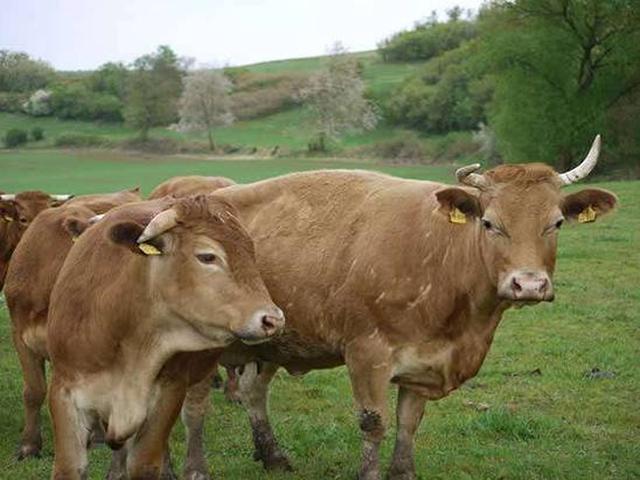
Breed history: Glanrind is a breed of cattle that originates from the valley of the Glan River in Germany. Its origins begin in the German state of Rhineland-Palatinate, at the foot of the Donnersberg mountain. Local, small, predominantly red cows were crossed with Simmental and Bern bulls. The goal was to improve the productivity of the local livestock. In 1773, Duke Christian IV of Palatinate-Zweibrücken issued a decree regulating the breeding of improved cattle, which marked the official beginning of the breed's formation. As a result of selection, two types were formed: the lighter, dairy "Glan cattle" and the heavier working "Donnersberg cattle." In the 19th century, these two types mixed, forming the "Glan-Donnersberg cattle," which spread to the regions of Hunsrück, Westerwald, and Eifel. In the late 19th to early 20th century, the first breeding books and associations were established. In the 1920s and 1930s, blood from the yellow Franconian cattle was introduced into the breed for "refreshing." In the mid-20th century, the priority in breeding became increasing milk yields, for which red Danish dairy cattle were used. However, this led to a decrease in the meat quality of Glanrind. In the 1960s, crossbreeding with other breeds continued, putting purebred Glanrind on the brink of extinction. Fortunately, in the 1980s, a group of enthusiasts began work on restoring the breed, so the population gradually increased. Exterior: Glanrind are medium-sized animals with a strong build. Bulls reach a height at the withers of 140-145 cm, while cows measure 135-140 cm. The weight of bulls ranges from 1000-1200 kg, and cows weigh 600-750 kg. The characteristic color is a uniform yellowish-red, sometimes with lighter areas on the belly and the inner sides of the legs. The muzzle is light, pink, known as "flosmaul." The horns are light, whitish-gray, often with dark tips, curved forward and slightly downward. The head is of medium size, with a wide forehead. The neck is short and muscular. The chest is deep and wide. The back is straight and long. The rump is wide and even. The legs are strong, and the hooves are sturdy, yellow or dark brown in color. The tail is set high. The udder in cows is well-developed, with evenly spaced medium-sized teats. Housing conditions: Glanrind is a breed well adapted to year-round pasture-based housing. They are undemanding, resilient, and capable of utilizing even low-quality feed.
Log in to learn more
Sign inWhat to feed
Diet: The basis of the Glanrin breed's diet is pasture grass. During the winter period, animals are fed hay, silage, root crops, grains, and concentrated feeds. Calves in the first months of life are fed maternal milk, and then gradually transitioned to a diet consisting of hay, succulent feeds, and concentrates. Pregnant cows require a more nutritious diet rich in protein, vitamins, and minerals.
Physical parameters
Male Weight: 140–145 kg
Female weight: 135–140 kg
Male height: 1000–1200 cm
Female height: 600–750 cm
Habitat Range
Germany
Frequently Asked Questions
How much does Glendronach weigh?
Adult animal: male — 140–145 kg, female — 135–140 kg.
How tall is Glendronach?
Height at the withers: male — 1000–1200 cm, female — 600–750 cm.
Where does Glendronach come from?
Country of origin — Germany.
What should Glendronach be fed?
Diet: The basis of the Glanrin breed's diet is pasture grass.
Q&A
No questions yet. Ask the first!
Log in to ask a question