




Afrikaner — buy or sell


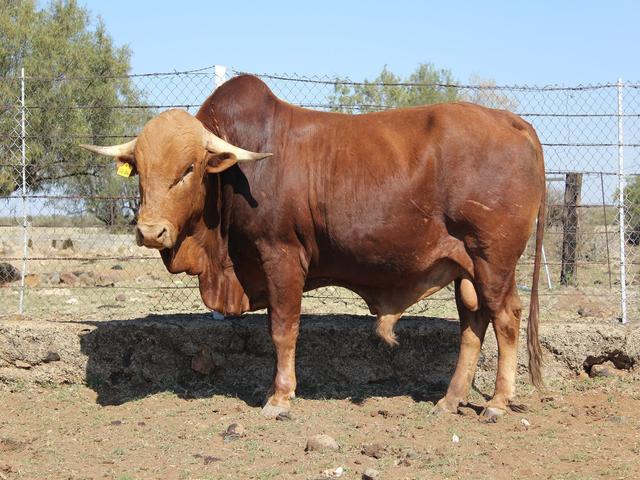
Breed history: Afrikaner (or Afrikander) is a breed of cattle that is an integral part of the history and culture of South Africa. This indigenous breed belongs to the Santa group, which includes ancient breeds of African cattle. Afrikaners are primarily raised for meat production and are considered the most popular local breed in South Africa. The history of Afrikaners dates back to ancient times. They were brought to South Africa by the Khoikhoi people as early as the first century AD. The first owners of these cattle were the Khoikhoi, who passed them on to Dutch colonists in 1652. The latter appreciated the endurance and strength of Afrikaners and began using them as draft animals. It was the Afrikaner oxen that pulled the wagons of the Boers during the Great Trek of 1835-1836, when they migrated deeper into the continent. By the end of the 19th and the beginning of the 20th century, Afrikaners were on the brink of extinction. An outbreak of cattle plague and the war in South Africa dealt a severe blow to the population. However, thanks to the efforts of farmers, the surviving herds allowed the breed to be revived. In 1912, the first Afrikaner breeding society was established in South Africa, which contributed to its further development. In the early 20th century, the breed again faced the threat of extinction due to the destruction during the Second Anglo-Boer War and an outbreak of plague. After the war, breeding improvement programs were developed, which allowed the breed not only to survive but also to spread beyond South Africa. In 1923, it was proposed to send Afrikaners to the USA, and in 1932, the US government imported a herd to improve local breeds along the Gulf Coast. In 1953, Afrikaners arrived in Australia, where they began to be studied for adaptation to the local climate. Today, the Afrikaner is a successful meat breed that is popular not only in South Africa but also in other countries around the world. Exterior: The Afrikaner is a large breed of cattle with long legs and well-developed musculature, indicating their meat production orientation. Adult cows weigh between 525–600 kg, while bulls weigh between 750–1000 kg. There are also true giants: bulls weighing over 1100 kg and cows over 800 kg. The height at the withers of Afrikaners is impressive. Adult individuals can reach 152 cm at the withers. The average height of bulls is 143 cm, while cows measure 115 cm (which is remarkable).
Log in to learn more
Sign inWhat to feed
Diet: The Afrikaner cow is very resilient and can live even in harsh conditions where there is little food and water. Afrikaner bulls raised on regular grass with the addition of phosphorus and salt weigh an average of 250 kg at 27–30 months of age. This is a very good result, considering they do not receive much special feed. Of course, Afrikaners feel best in pastures. However, during dry periods, the grass burns out, and the cows may start to starve. They particularly lack calcium and phosphorus, which negatively affects their health and productivity. To address this issue, farmers use various methods. Throughout the year, cows are given mineral supplements with calcium and phosphorus. They can also be fed grain, but this is expensive, as the grain has to be imported from other countries. In some farms, cows are fed bran and brewer's grains—these are useful and nutritious by-products from factories. However, not all farmers have the means to obtain them. Another method is to prepare straw and plant residues after harvesting for winter, such as peanut foliage. Some farmers grow special forage crops, such as lablab or dark purple macroptilium. They grow well even in areas with little water and are excellent feed for cows. Sometimes cows are supplemented with chicken manure, but it must first be specially processed to avoid infecting the cows with diseases, and such supplementation should not be overused.
Physical parameters
Male Weight: 110–143 kg
Female weight: 90–115 kg
Male height: 750–1000 cm
Female height: 525–600 cm
Habitat Range
Afghanistan
Albania
Algeria
American Samoa
Andorra
Angola
Anguilla
Antigua & Barbuda
Argentina
Armenia
Aruba
Australia
Austria
Azerbaijan
Bahamas
Bahrain
Bangladesh
Barbados
Belarus
Belgium
Belize
Benin
Bermuda
Bhutan
Bolivia
Bosnia & Herzegovina
Botswana
Brazil
British Virgin Islands
Brunei
Bulgaria
Burkina Faso
Burundi
Cambodia
Cameroon
Canada
Cape Verde
Caribbean Netherlands
Cayman Islands
Central African Republic
Chad
Chile
China
Colombia
Comoros
Congo - Brazzaville
Congo - Kinshasa
Cook Islands
Costa Rica
Croatia
Cuba
Curaçao
Cyprus
Czechia
Côte d’Ivoire
Denmark
Djibouti
Dominica
Dominican Republic
Ecuador
Egypt
El Salvador
Equatorial Guinea
Estonia
Eswatini
Ethiopia
Faroe Islands
Fiji
Finland
France
French Guiana
French Polynesia
Gabon
Gambia
Georgia
Germany
Ghana
Gibraltar
Greece
Greenland
Grenada
Guadeloupe
Guam
Guatemala
Guernsey
Guinea
Guinea-Bissau
Guyana
Haiti
Honduras
Hong Kong SAR China
Hungary
Iceland
India
Indonesia
Iran
Iraq
Ireland
Isle of Man
Israel
Italy
Jamaica
Japan
Jersey
Jordan
Kazakhstan
Kenya
Kiribati
Kosovo
Kuwait
Kyrgyzstan
Laos
Latvia
Lebanon
Lesotho
Liberia
Libya
Liechtenstein
Lithuania
Luxembourg
Macao SAR China
Madagascar
Malawi
Malaysia
Maldives
Mali
Malta
Marshall Islands
Martinique
Mauritania
Mauritius
Mayotte
Mexico
Micronesia
Moldova
Monaco
Mongolia
Montenegro
Morocco
Mozambique
Myanmar (Burma)
Namibia
Nauru
Nepal
Netherlands
New Caledonia
New Zealand
Nicaragua
Niger
Nigeria
North Korea
North Macedonia
Northern Mariana Islands
Norway
Oman
Pakistan
Palau
Palestinian Territories
Panama
Papua New Guinea
Paraguay
Peru
Philippines
Poland
Portugal
Puerto Rico
Qatar
Romania
Russia
Rwanda
Réunion
Samoa
San Marino
Saudi Arabia
Senegal
Serbia
Seychelles
Sierra Leone
Singapore
Sint Maarten
Slovakia
Slovenia
Solomon Islands
Somalia
South Africa
South Korea
South Sudan
Spain
Sri Lanka
St. Kitts & Nevis
St. Lucia
St. Martin
St. Vincent & Grenadines
Sudan
Suriname
Sweden
Switzerland
Syria
São Tomé & Príncipe
Taiwan
Tajikistan
Tanzania
Thailand
Timor-Leste
Togo
Tonga
Trinidad & Tobago
Tunisia
Turkmenistan
Turks & Caicos Islands
Tuvalu
Türkiye
U.S. Virgin Islands
Uganda
Ukraine
United Arab Emirates
United Kingdom
United States
Uruguay
Uzbekistan
Vanuatu
Venezuela
Vietnam
Wallis & Futuna
Western Sahara
Yemen
Zambia
Zimbabwe
Åland Islands
Frequently Asked Questions
How much does Afrikaner weigh?
Adult animal: male — 110–143 kg, female — 90–115 kg.
How tall is Afrikaner?
Height at the withers: male — 750–1000 cm, female — 525–600 cm.
Where does Afrikaner come from?
Country of origin — South Africa.
Where is Afrikaner bred?
The breed is common in: Afghanistan, Albania, Algeria, American Samoa, Andorra, Angola, Anguilla, Antigua & Barbuda.
What should Afrikaner be fed?
Diet: The Afrikaner cow is very resilient and can live even in harsh conditions where there is little food and water.
Q&A
No questions yet. Ask the first!
Log in to ask a question